
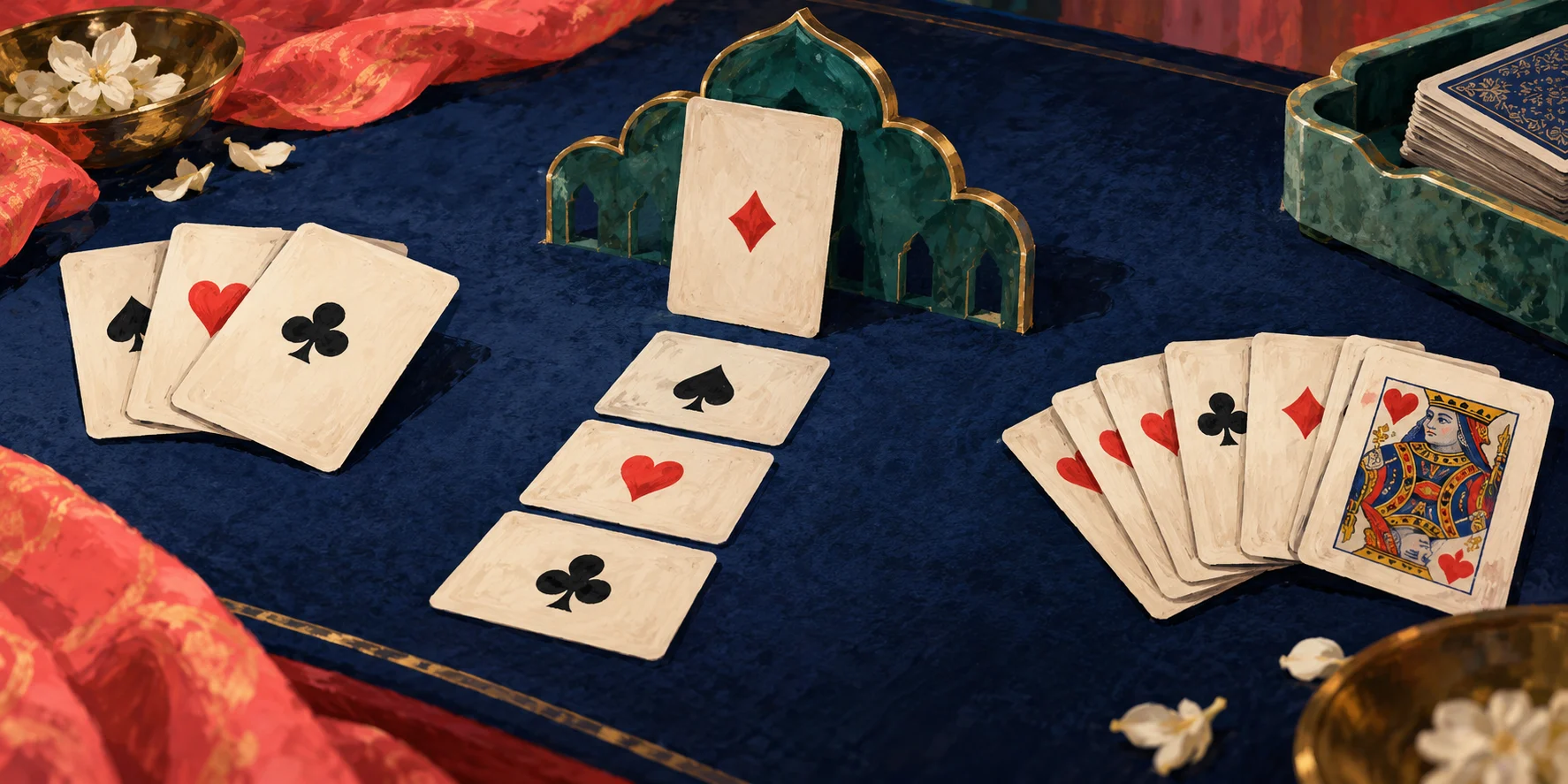
Teen Patti, Andar Bahar and Rummy bring three distinct styles of card play to an Indian casino audience. They share a deck of cards, but the action at each table is different. Teen Patti compares three-card hands. Andar Bahar follows a matching card into one of two piles. Rummy builds sequences and sets over a series of turns.
This independent publication explains traditional games using the sources linked below. Game availability and the rules of a specific version require separate verification.
Teen Patti: the shape of a hand
Pagat’s Teen Patti rules describe a traditional game using a 52-card pack and three cards per player. Players compare the strength of their hands under a ranking agreed for the game. Pagat lists a trio, or three cards of the same rank, above a straight run, a normal run, a colour, a pair and a high-card hand.
A trio of three queens and a pair of queens are different hand types. A trio contains three cards of the same rank; a pair contains two, with a third card of another rank. The hierarchy tells players how to compare those types. If two hands belong to the same type, the relevant tie rules are needed as well.
Pagat also describes seen and blind play: a player may look at the cards or leave them face down. Those terms belong to its traditional account. A named online variation can alter the sequence or introduce extra options, so its own rules are needed to establish how it works.
Andar Bahar: a matching-card round
Pagat’s Andar Bahar description starts with a face-up reference card. The dealer then places cards alternately into the Andar and Bahar piles until a card matches the rank of that first card. The pile receiving the match determines the outcome in the described version.
Suppose the reference card is a seven. A later seven is a rank match regardless of suit. If a non-matching card appears first, the round continues. The location of the matching card is the key piece of information, unlike Teen Patti where the composition of a three-card hand is compared with other hands.
Pagat notes that variations exist. The starting side, side selections and other conditions should be taken from the rules of the actual version. A catalogue cover cannot establish the rules of a particular version.
Rummy: runs and sets
In the Indian Rummy form described by Pagat, a player arranges 13 cards into runs and sets. A run consists of consecutive cards of the same suit. A set contains cards of the same rank in different suits, according to the source’s example.
For instance, five, six and seven of hearts form a run in that description. Three fives in different suits form a set. These are different ways of grouping cards: one follows a sequence in a suit, while the other groups equal ranks. The source also discusses jokers and the conditions for a valid hand; a different Rummy version may define these details differently.
Rummy unfolds through drawing and discarding. A single visible card is only one part of the hand. The arrangement of the whole hand matters when considering whether the conditions of the particular game have been met.
Three tables, three sequences
At a Teen Patti table, the relevant object is a three-card hand and its rank. In Andar Bahar, the reader follows the reference card and the two piles. In Rummy, the reader follows a changing hand and the groups it can form. The same deck can therefore produce very different kinds of round.
A live-dealer presentation, where independently verified, can add a video view of a table. It does not change the need to identify the actual game and its rules.
Comparing the cards on the table
A Teen Patti hand has three cards from the outset. A player comparing two pairs first needs to identify the pair in each hand; the remaining card matters under the tie procedure described by Pagat. In Andar Bahar, the suit of a matching card does not determine its rank. The important observation is which pile receives that match. Rummy uses the relationship between several cards in a hand: a run follows consecutive ranks in one suit, while a set groups matching ranks in different suits. The rules of a particular version determine the full conditions for a completed hand.
Context beside slots and cricket
Slots and cricket offer different kinds of action. A slot’s symbols and features are described by its paytable; cricket is organised into innings and overs. Neither should be presented as a variation of these card games. Keeping the categories separate makes a casino page easier to navigate and avoids using a general rule to imply a specific service is available.
Any offer or payment method depends on the responsible service and its current terms. Availability and eligibility can differ by account and location.
These card examples explain how the named formats differ. They do not promise an outcome or encourage a wager. Game availability, applicable rules and account functionality are separate questions that require their own evidence.